
When a solar system quits, the first thing a homeowner looks at is the roof. That’s where the panels are, so that’s where the problem must be.
It usually isn’t.
Bryan called us because his Enphase system had stopped generating. Production was inconsistent and then it went to zero. The panels were fine. So were the microinverters. The failure was in a gray box on the side of the house.
What Brandon found
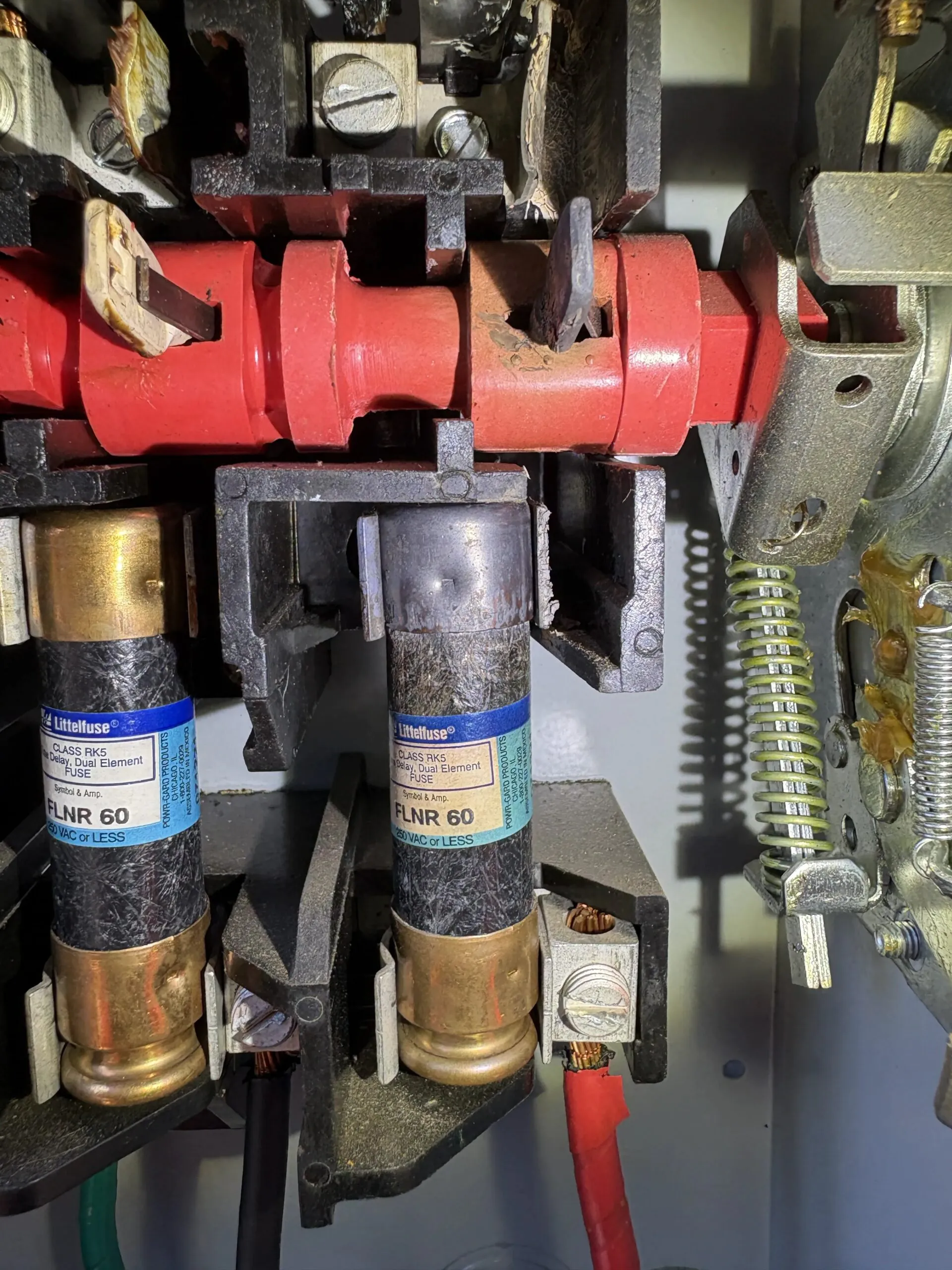
Between the array and the main service panel, this system had a Midwest knife-blade AC disconnect. It’s a straightforward piece of equipment: a fused switch that lets you cut the solar system’s AC output.
Inside it, the fuse had failed. But the fuse wasn’t the whole story.
There was significant heat damage in the disconnect — to the fuse itself and to the metal fuse clip it seats into. That damage was keeping the system from seeing a clean 240V, which is why production had gone from spotty to nonexistent.
A fuse doesn’t usually die of old age. When you find one cooked along with the hardware around it, that’s a symptom, not the diagnosis.
Why he didn’t stop at the fuse
Brandon installed a new 60A fuse to see what the system would do.
It came back online. Production resumed. On a lot of service calls, that’s where the visit ends and the invoice gets written.
About ten minutes later, the disconnect started arcing and sizzling, and the system dropped offline again.
That’s the part of this job worth paying attention to. A new fuse in a damaged fuse clip doesn’t make good contact. Poor contact creates resistance, resistance creates heat, and heat destroys the next fuse the same way it destroyed the first one. If Brandon had packed up after the first successful restart, Bryan would have had a working solar system for the afternoon and a dead one again within a week or two — plus ongoing arcing inside an enclosure on the exterior of his house.
The fuse was the thing that failed. The disconnect was the reason it failed.
The fix
Replacing a knife-blade disconnect of this vintage isn’t always the most sensible answer. So before deciding, Brandon reviewed the installation and confirmed with Blake in the office whether this disconnect was still required under current code for this particular system configuration.
It wasn’t.
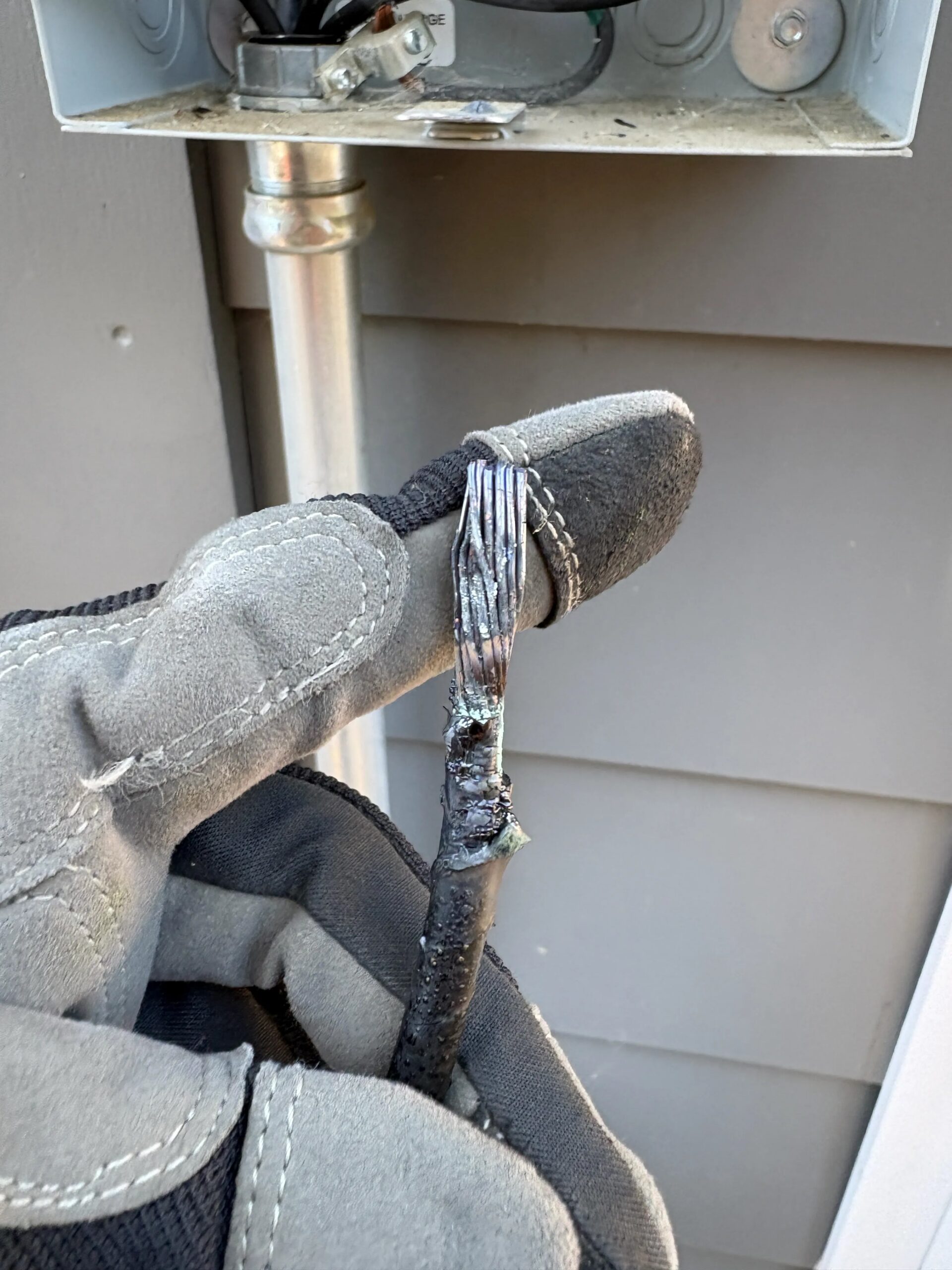
That opened up a cleaner option: bypass the damaged disconnect and make a direct connection, with safe shutoff capability maintained through equipment already on the system — the combiner and the main service panel. The system keeps everything it needs to be safely de-energized for service or emergency response, and the failed component stops being a point of failure.
Brandon’s next step was to walk the proposed solution through with Bryan before doing the work. Changes to how a solar system connects to a home shouldn’t be a surprise the homeowner discovers later on an invoice.
The takeaway for homeowners
A solar array is a system, not just a set of panels. Production can stop because of:
- Microinverter or inverter failure
- A tripped breaker or blown fuse
- Heat-damaged connections in a disconnect, combiner, or junction box
- Corrosion in outdoor enclosures
- Communications or monitoring failures, where the system is producing but not reporting
- The panels themselves, which is the least common of the list
That’s why the diagnosis matters more than the part. Swapping a component that failed for reasons nobody investigated buys you a few weeks, not a fix.
Common questions
My monitoring shows zero production. Is that always a real outage?
Not always. Sometimes the system is producing and the monitoring has lost communication. That’s one of the first things we separate out.
How long can a system sit down before it’s worth calling?
If production has been at zero for more than a day or two with normal weather, it’s worth a call. Every day offline is power you’re buying from the utility instead of making.
Is arcing dangerous?
Yes. Arcing inside an electrical enclosure is a fire risk and shouldn’t be left in service. If you hear sizzling or crackling from any electrical equipment, shut the system down if you can do so safely and call a licensed electrician.
Does my solar system need an AC disconnect?
It depends on the configuration and the code in effect. Some systems require one; others achieve the same shutoff capability through other equipment. That’s a determination for a licensed contractor, not a guess.
Solar not producing like it used to?
Urban Design services and troubleshoots solar systems across Butte County and the surrounding areas, including systems we didn’t install. We’ll find out what’s actually wrong before we quote you a repair.


